Gutter Guards for Pine Needles: What to Ask Before Buying
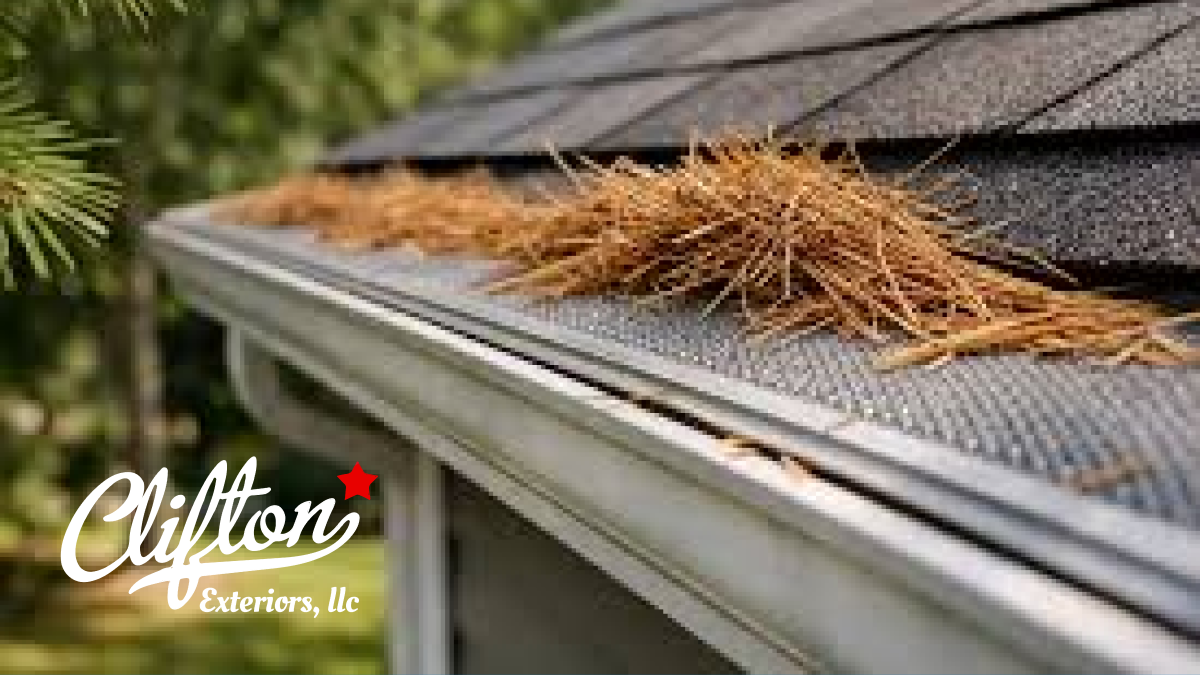
If your yard in Clifton, Fairfax, or Centreville is surrounded by mature Virginia pines or white pines, you already know that pine needles are a completely different beast than autumn oak or maple leaves. They fall year-round, shed heavily during late summer and fall, and are thin enough to spear straight through standard gutter screens.
Once inside your gutters, pine needles interlock with sap, roof grit, and spring pollen to form a dense, water-blocking mat that causes rainwater to overflow right onto your fascia boards and foundation. Unfortunately, many homeowners invest thousands in gutter protection only to discover that the wrong guard design either lets needles slip through or turns the top of the gutter into a flat shelf where wet needles pile up.
Before investing in a gutter protection system, here is how different guard styles handle pine needles—and the essential questions to ask any contractor before you buy.
Why Most Gutter Guards Fail Against Pine Needles
Not all gutter covers are built for conifer debris. Knowing which styles struggle in pine-heavy yards saves you from paying for a system that still requires seasonal ladder climbs:
- Basic Mesh Screens & Perforated Aluminum: Standard holes and louvers are wide enough for dry pine needles to thread directly into the gutter trough vertically.
- Foam and Brush Inserts: While inexpensive, foam wedges and bristle brushes sit inside the gutter channel, trapping pine needles directly in the material where they decompose into mud.
- Reverse-Curve (Hooded) Guards: Designed to guide water around a curved nose while large leaves fall off, reverse-curve guards frequently struggle with pine needles, which cling to wet surfaces via surface tension and wedge inside the narrow water slot.
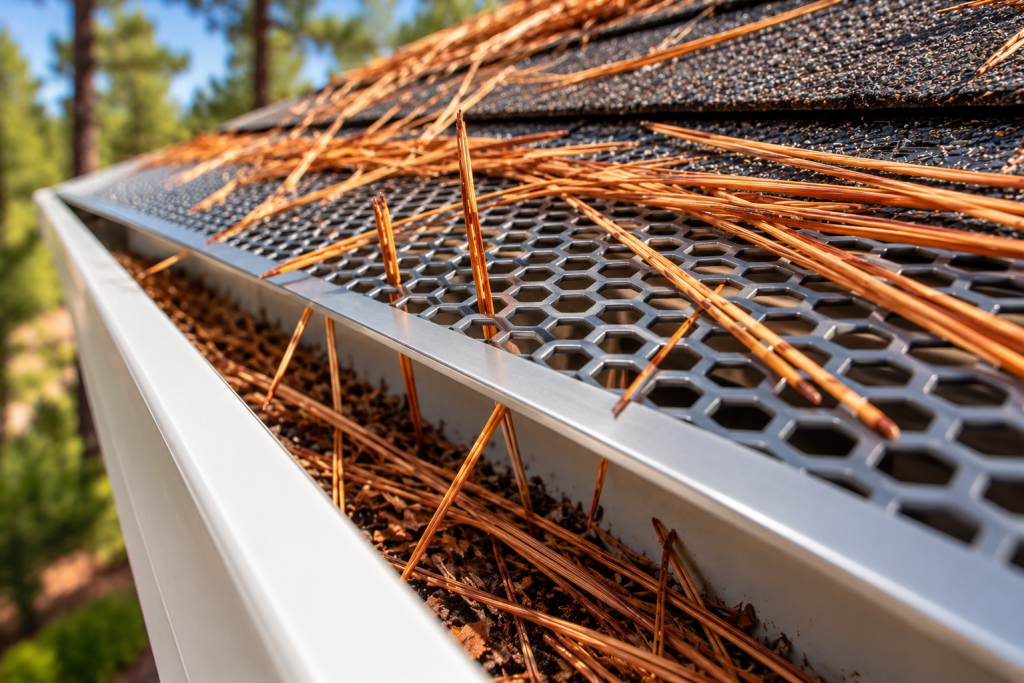
- Surgical-Grade Stainless Steel Micro-Mesh (The Winner): A tightly woven stainless steel micro-mesh—typically featuring openings between 50 and 275 microns—blocks even the smallest pine needles, shingle grit, and seed pods while letting heavy rainwater pass straight through.
5 Essential Questions to Ask Before Buying Gutter Guards
Even within the micro-mesh category, build quality and installation methods vary dramatically. Ask these five questions during your consultation to ensure you get a system engineered for pine trees:
1. "What Is the Mesh Made Of, and How Fine Are the Openings?"
Plastic or nylon mesh warps under summer heat and can tear under the weight of wet pine debris or winter ice. Look for 304 or 316 surgical-grade stainless steel micro-mesh. Ask about the micron rating—openings under 300 microns are fine enough to keep both long and short pine needles from poking through.
2. "Is the Frame All-Metal or Vinyl/uPVC?"
A strong mesh is only as reliable as the frame holding it. Over time, vinyl or plastic frames can expand, contract, and pull away from the gutter lip, creating tiny gaps along the seams where pine needles immediately work their way in. Rigid, anodized aluminum frames with a bonded mesh stay flat, resist sagging, and won't warp through Northern Virginia's freeze-thaw cycles.
3. "Will the Guard Be Installed Flat or Angled with My Roof Pitch?"
This is one of the biggest overlooked details in pine-heavy yards. If a micro-mesh guard is installed completely flat inside the gutter, pine needles won't enter the trough—but they will sit on top of the screen like a shelf, trapping pollen and organic film until water sheets right over the edge. Installing the guard at a slight downward angle (aligned with your roof's pitch) allows wind and rain to naturally wash needles off the front edge.
4. "How Does the System Attach—and Will It Void My Roof Warranty?"
Never allow an installer to nail or screw gutter guard brackets directly through your roof shingles, as doing so can create leak points and void your roofing manufacturer's warranty. Quality systems either attach securely to the front and back lips of the gutter itself or tuck neatly under the first course of shingles without penetrating the roof deck.
5. "Are Your Existing Gutters Properly Pitched and Supported First?"
Installing gutter guards over sagging, leaking, or poorly pitched gutters only hides underlying drainage issues. Before any guard goes on, a reputable contractor should inspect your entire gutter run, reseal end caps and miters, reinforce loose hangers, and ensure proper slope toward the downspouts.
Protect Your Home with High-Capacity Gutters & Guards
The right gutter protection system should take ladder duty off your weekend to-do list for good—not trade inside-the-gutter clogs for on-top-of-the-gutter buildup. Pairing heavy-duty seamless gutters with a properly pitched stainless steel micro-mesh guard keeps rainwater flowing safely away from your roofline, siding, and foundation through every Northern Virginia storm.
At Clifton Exteriors, we install high-capacity seamless gutter systems and durable gutter guards tailored to the exact tree coverage and roofline of your home. Every installation is backed by our transparent upfront pricing and our 10-Year Workmanship Guarantee.
Tired of clearing pine needles out of your gutters? Contact Clifton Exteriors today for a free, zero-pressure inspection and estimate!