Is Winter Roof Replacement a Bad Idea—or a Smart One?
The Cold Doesn't Have to Stop You
Is it really safe—or even possible—to tear off shingles when your roof's covered in frost? Or are winter roof replacements just asking for leaks, delays, and freezing crews?
In this post, you'll learn when and how a winter roof replacement can work, what weather conditions matter most, and how each season compares for getting the job done.
By the end, you'll know what to watch for—and how to plan a smart, safe winter roof replacement.
Can You Replace a Roof in Winter?
You can replace a roof in winter if temperatures stay above 40°F and the weather is dry. Asphalt shingles need warmth to seal properly, and ice or snow increases safety risks. Reputable roofers use proper tools and timing to ensure a successful winter install, often with faster scheduling availability.
How often do you need to replace your roof?
Can Clifton Do Winter Roof Replacements?
Yes, it's absolutely possible when temps are managed right. We use GAF-certified crews and materials rated for cold-weather installation, so projects can still be completed safely and effectively.
Why Temperature and Weather Conditions Matter
Temperature Thresholds for Shingle Adhesion
Asphalt shingles aren't just nailed down—they're heat-activated.
Most manufacturers recommend installing them when outdoor temperatures are at least 40 degrees, as this ensures the shingles properly seal and adhere to the surface.
Below that point, the adhesive strip stiffens and doesn't bond correctly, leaving your new roof more likely to leak or suffer wind damage once winter storms hit.
Some roofing materials can technically be installed at lower temperatures, but that often voids the manufacturer's warranty. Inexperienced roofing companies may overlook this detail, leading to costly repairs.
Even with careful planning, colder temperatures make shingles brittle, which means they're more likely to crack during handling.
Winter roofing is possible, but only when done according to best practices.
Ice and Snow Hazards
Snow, sleet, and freezing rain don't just slow down a project—they can make winter roofing dangerous.
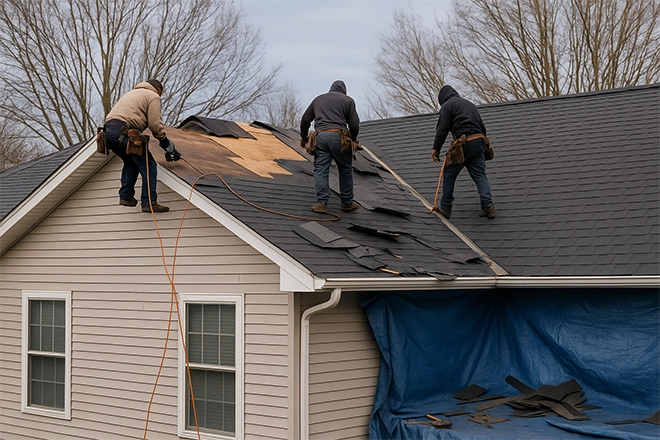
Crews have to climb ladders and walk across sloped surfaces, often covered with frost or hidden ice patches. That's a recipe for slips, falls, and damaged materials.
This creates a safety risk and can delay the roof installation process for days.
Even small amounts of snow on the surface prevent proper shingle placement.
Melting snow or refreezing water can seep under the underlayment, freeze again, and cause structural damage later on.
If you're going to replace a roof in the winter, it's essential that the surface is completely clear and dry before beginning work.
Reputable local roofing contractors will reschedule jobs if needed to avoid accidents and protect your home.
Seasonal Comparisons for Roof Replacement
Fall – The Best All-Around Season
Fall is the most popular time for roof replacements because the temperatures are moderate, the humidity is lower, and there's less rain overall.
These conditions make it easier to seal shingles, prevent moisture issues, and complete the project without unexpected delays. Homeowners also like fall because it prepares their home for winter, especially if their old roof has known issues like leaks or cold spots.
The one downside is that many people are thinking the same thing.
Demand surges during the fall months, so roofing contractors often book up weeks in advance.
If you want your new roof installed before the winter season begins, it's smart to start getting quotes and setting your schedule by late summer.
Spring – A Good Option with Caveats
Spring brings warmer temperatures and longer daylight hours, both of which help roofing projects stay on track.
It's also a good time to identify damage caused by heavy snowfall, ice dams, or wind from the winter months. Replacing your roof in spring can help prevent more damage before the summer heat arrives.
However, spring also brings its share of challenges, from rain showers sweeping across Burke Lake Park to pollen blowing in from blooming trees near Hidden Oaks Nature Center.
- Rain is more frequent, which means roofers have to work around changing forecasts.
- Too much moisture can slow down progress or force a delay.
- Pollen and debris from blooming trees can also interfere with proper shingle adhesion if the surface isn't kept clean throughout the installation.
Summer – Reliable Weather but High Demand
Summer has some of the most consistent roofing weather.
The warmer temperatures help asphalt shingles seal quickly, and long, sunny days allow crews to move fast. This is especially true during early summer, before afternoon thunderstorms become more common in some regions.
But summer is peak season for most roofing companies.
Homeowners who waited through spring are now eager to get work done, and that high demand can drive up prices and extend timelines.
In extreme heat, materials can become too soft and hard to handle cleanly, and safety risks go up for workers on hot rooftops.
It's effective, but not always the smoothest option.
Winter – Possible, But Risky
Winter roof replacements come with a clear tradeoff.
On one hand, the slower season gives you more flexibility with scheduling and sometimes better prices.
On the other hand, you face challenges with brittle shingles, unpredictable snow, and colder temperatures that can interfere with sealing and safety.
Some roofing contractors take extra precautions in winter, like hand-sealing shingles or warming materials before use.
But that adds time and cost to the process.
If temperatures drop below the manufacturer's recommendations or ice coats the roof deck, crews may have to pause the job until conditions improve.
Still, if your current roof has active leaks, broken shingles, or structural damage, waiting until spring could lead to more costly repairs.
Signs It's Time to Replace Your Roof (No Matter the Season)
Frequent Leaks
A few occasional leaks might be solved with simple repairs, but if you're seeing water spots after every rain or melted snow event, your roof is likely failing.
Shingle Deterioration
When asphalt shingles begin curling, cracking, or shedding granules into your gutters, it's a clear sign that your roof is near the end of its life.
Roof Age
Roofing materials don't last forever. Most asphalt shingle roofs perform well for 15 to 25 years. Metal roofing might last 40 to 70 years, while tile can go a century with proper care.
Structural Problems
When your roof deck starts to sag or your attic shows signs of daylight through the rafters, repairs likely aren't enough. Structural damage can lead to serious safety risks during the winter season, especially when melting snow adds extra weight.
How to Plan a Winter Roof Replacement Successfully
Choose a Contractor Familiar With Cold-Weather Installation
Not all roofing contractors are experienced with winter roofing.
You want someone who understands how cold temperatures affect installation, who checks the manufacturer's recommendations before applying materials, and who won't rush the job in poor weather.
Ask your roofing contractor if they've done winter roof replacements before and how they handle freezing temperatures, nail guns, and sealant adhesion in the cold.
A reputable roofer will be upfront about scheduling flexibility and won't risk your home or their crew's safety just to stay on a deadline.
How do you find a reputable roofer?
Monitor the Forecast and Stay Flexible
If you're scheduling a roof replacement in January or February, make sure your contractor keeps a close eye on weather conditions.
Even a one-day drop into the 20s can delay a job.
Ice, wind speeds, and snow accumulation all increase the risk of errors or injuries.
You may need to allow more time in your schedule for the installation process than you would in summer, since icy winds sweeping across the Bull Run Trail can delay material handling and drying.
It's better to wait a few days for the right conditions than to rush a job that could lead to long-term issues, crew endangerment, or voided warranties.
Prepare Your Home
Help your contractor get in and out safely by clearing ice or snow from walkways and driveways. If you've had previous problems with ice dams or attic heat loss, now's a good time to ask about upgrades like snow guards, ridge vents, or additional insulation.
Unfreeze Your Roofing Plans with Clifton Exteriors
Cold weather doesn't have to put your roofing plans on ice—Clifton Exteriors knows how to handle winter roof replacements with care and precision. We follow the manufacturer's recommendations, use cold-weather techniques, and make sure your roof is sealed tight before the next freeze.
If your current roof is leaking, sagging, or shedding shingles, don't wait for warmer temperatures to act. Fill out our contact form today or give us a call to get your roof back on track, so you can enjoy the lights at Vienna's Holiday Stroll of Lights instead of worrying about your roof.
Frequently Asked Questions
What is the lowest safe temperature to install a roof in winter?
Install asphalt shingles only when temperatures stay at or above 40 °F to ensure proper sealing and flexibility. Below that, shingles may crack, adhesives may fail, and extra hand-sealing is required. Always follow manufacturer instructions and avoid snow or ice on the roof deck during installation.
How long will a winter roof replacement take compared to warmer months?
Expect winter roof replacements to take longer than in warmer months due to shorter daylight, cold materials, and slower adhesive curing. A one- or two-day job in summer may extend to several days in winter, especially with snow removal or weather delays.
Will replacing a roof in winter save money?
Save money by scheduling a roof replacement during the winter off-season, when demand is lower and contractors may offer discounts. Ensure your roofer follows cold-weather best practices to offset risks from temperature and weather conditions.