Steel or Fiberglass? The Truth Most Homeowners Miss
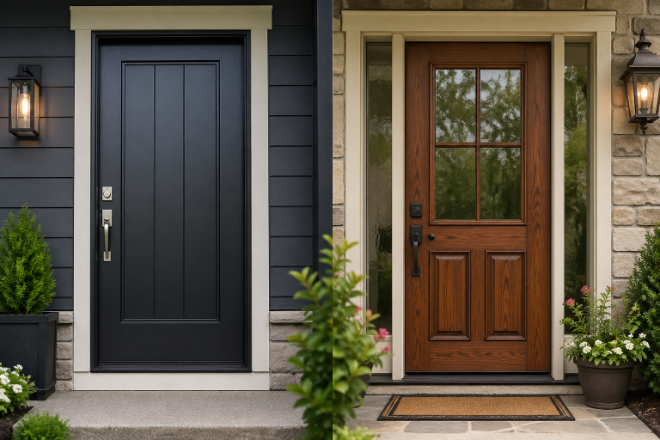
Door Wars: Steel Strength or Fiberglass Finesse?
Is a fiberglass vs. steel door really about looks, or does performance matter more?
And when it comes to your front door, are you choosing for security, curb appeal, or long-term value?
In this guide, you'll learn how fiberglass and steel doors compare across cost, durability, energy efficiency, and more.
By the end, you'll know exactly which door materials make the most sense for your home and your priorities.
Fiberglass vs Steel Doors: Which Is Better?
When comparing fiberglass vs steel, the main difference comes down to priorities.
Steel doors tend to win on security and lower cost, while fiberglass doors typically stand out for style, durability, and low maintenance.
Both fiberglass and steel entry doors offer excellent insulation and a long lifespan when installed correctly.
If you're looking for a quick breakdown, here's how they stack up:
- Steel entry doors: stronger, more secure, and more budget-friendly.
- Fiberglass entry doors: better curb appeal, more design flexibility, and very low maintenance.
- Both fiberglass and steel doors: energy efficient and durable when properly installed.
- Fiberglass doors typically last longer due to resistance to rust and extreme weather conditions.
- Steel doors tend to deliver higher resale value in the short term.
For many homeowners, the choice isn't about which door is "better" overall—it's about which one fits your home, your climate, and your priorities.
Steel vs Fiberglass Entry Doors: Quick Comparison
Strength and Security Differences
When it comes to home security, steel entry doors have a clear edge.
Steel is extremely sturdy and harder to break or force open, making it a strong choice if security is your top concern.
A high-quality steel door paired with a solid door frame and locking system adds another layer of protection.
Fiberglass doors can still be secure, especially when reinforced, but they don't match the raw strength of steel. If your main goal is greater protection and peace of mind, steel doors are the safer bet.
Cost Differences
The cost comparison between fiberglass and steel is one of the biggest factors when reviewing front door replacement costs.
Steel doors are generally the lower-cost option, making them attractive for homeowners looking for a reliable exterior door without a high upfront investment.
Fiberglass doors typically cost more, especially when you factor in decorative glass, wood-grain finishes, and custom options.
That said, many homeowners see fiberglass as a long-term investment because of its durability and low maintenance.
Clifton Exteriors, LLC provides quotes for exterior door projects based on material, style, and features, allowing homeowners to compare options before committing to a door replacement.
Durability and Longevity
Both fiberglass and steel doors are durable, but they perform differently over time.
Steel doors are extremely durable against impact, but if struck hard, they can dent and may require repair.
Fiberglass doors typically hold up better against daily wear, temperature changes, and extreme weather. Unlike steel, fiberglass won't rust, warp, or rot, which helps explain its long lifespan.
Maintenance Requirements
Maintenance is where fiberglass doors really stand out.
A quality fiberglass door is very low maintenance, often requiring nothing more than regular cleaning with mild soap and water.
Steel doors are still fairly low-maintenance, but they need more attention if the steel skin is scratched. If exposed metal is left untreated, it can lead to rust, so touch-ups are important to prevent rust and maintain performance.
Appearance and Customization
If curb appeal matters, fiberglass offers more flexibility.
Fiberglass front doors come in many styles, colors, and finishes, including options that mimic real wood with detailed wood grain textures.
Steel doors usually have a smoother surface and fewer design options. They work well for simple or modern looks, but they don't match the customization range of fiberglass and steel alternatives.
Cost and Value Breakdown
Upfront Cost Ranges
When replacing your front door or comparing the cost of patio doors, steel is usually the lower-cost choice.
A basic steel door delivers solid performance without stretching your budget, which is why it's a common pick for quick door-replacement projects.
Fiberglass doors are priced higher, especially when you choose high-end finishes or glass inserts. The added cost reflects the design flexibility and long-term durability you get with fiberglass door installation.
Clifton Exteriors, LLC offers consultations that help homeowners evaluate different door materials and understand how features like glass inserts and finishes affect overall project cost.
Long-Term Value and ROI
Steel doors often deliver strong resale value, making them appealing if you're focused on short-term return.
Many homeowners see steel and fiberglass doors, as with home replacement windows, as one of the best upgrades for boosting home value.
Fiberglass may offer better long-term value through lower maintenance and a longer lifespan. Over time, avoiding repairs, repainting, and rust issues can offset the higher upfront cost.
Durability and Strength
Steel Door Durability
Steel is known for its strength.
It resists impact well and adds structural integrity to your entry doors, making it a solid choice for security and performance.
However, steel doors can dent if struck hard, and scratches may require maintenance. Without proper care, exposed areas can rust, affecting both appearance and longevity.
Fiberglass Door Durability
Fiberglass doors are extremely durable in a different way.
They resist damage from extreme weather conditions, including humidity and direct sun exposure, without warping or cracking.
Because fiberglass is a lightweight, flexible material, it better withstands environmental stress than rigid materials. That's a major reason fiberglass doors typically last longer.
Energy Efficiency and Insulation
Steel Door Insulation
Steel entry doors often include foam cores that provide excellent insulation.
This helps reduce thermal bridging, keeping indoor temperatures more stable and improving overall energy efficiency.
That makes steel a strong option if you're focused on an energy-efficient home, much as following an energy-efficient windows selection process would.
Fiberglass Door Insulation
Fiberglass also delivers excellent insulation.
It performs well across different climates and is less affected by temperature changes than some other door materials.
Fiberglass doors maintain their shape in extreme weather, which helps preserve their energy-efficient performance over time.
Maintenance and Upkeep
Steel Door Maintenance
Steel doors require occasional upkeep to stay in good shape.
Regular cleaning and repainting when needed will help maintain their appearance and prevent rust.
A quick wipe-down and periodic inspection are usually enough, but ignoring scratches can lead to bigger issues over time.
Fiberglass Door Maintenance
Fiberglass doors are known for low maintenance.
They don't dent, rust, or require frequent repainting, which makes them a hassle-free option for busy homeowners.
Most of the time, a simple rinse or light cleaning is all it takes to keep a fiberglass exterior door looking new.
Appearance and Design Flexibility
Fiberglass Design Options
Fiberglass offers a wide range of design options. From realistic wood doors to bold colors and decorative glass, fiberglass front doors can match almost any home style.
This flexibility makes fiberglass a popular choice for homeowners who want to improve curb appeal without sacrificing performance.
Steel Design Limitations
Steel doors are more limited in design.
They usually feature a smooth surface and fewer finish options, which works well for clean, modern designs, but not for more detailed aesthetics.
If appearance is a top priority, fiberglass has a clear advantage.
Security and Safety
Steel Door Security
Steel doors provide more protection against forced entry.
Their strength and weight make them harder to breach, especially when combined with high-quality locks and hardware.
That's why security steel entry doors are often recommended for homeowners focused on safety first.
Fiberglass Door Security
Fiberglass doors still offer solid security, especially when reinforced with a core. They support standard locking systems and can meet most residential security needs.
However, compared to steel, they don't offer the same level of resistance to extreme forces.
Climate and Environmental Performance
Fiberglass in Harsh Conditions
Fiberglass performs well in extreme weather, including humidity, rain, and temperature swings. It doesn't rust or warp, making it ideal for areas with challenging climates.
Its resistance to environmental damage is one reason fiberglass doors typically have a long lifespan.
Steel in Mild Conditions
Steel doors work best in mild climates where moisture exposure is limited.
While they can handle tough conditions, they may require more upkeep in wetter environments.
With proper maintenance, steel still performs well, but it doesn't offer the same natural resistance as fiberglass.
When to Choose Steel vs Fiberglass
When Steel Is the Better Choice
Steel is the better option when your focus is on security, durability, and lower cost.
It's ideal for homeowners who want a strong, reliable entry door without investing heavily up front.
It also works well when insulation and structural strength are top priorities.
When Fiberglass Is the Better Choice
Fiberglass is the better choice when you want style, low maintenance, and long-term durability. It's especially appealing if you like the look of real wood but don't want the upkeep that comes with wood doors.
Many homeowners choose fiberglass when curb appeal and ease of ownership matter most.
Types of Front Doors
Fiberglass Entry Doors
Fiberglass entry doors are durable, lightweight, and available in many styles.
They're resistant to weather damage and work well in almost any climate.
They've become a popular choice for modern door replacement projects thanks to their balance of performance and appearance.
Steel Entry Doors
Steel entry doors are strong, secure, and budget-friendly. They offer excellent insulation and are widely used for both residential and commercial entry doors.
With proper care, they can deliver reliable performance for years.
Wooden Entry Doors
Wood doors offer a classic look and natural beauty, but they require more maintenance than fiberglass and steel options. Regular sealing and protection are needed to prevent damage.
For homeowners who want the look of real wood without the upkeep, fiberglass is often the better alternative.
Choosing a New Entry Door
Key Decision Factors
Choosing a new door comes down to balancing performance, cost, and design.
You'll want to think about how the door fits your home, your climate, and your long-term goals.
Key factors to consider include:
- Energy efficiency and insulation performance.
- Home security and durability needs.
- Curb appeal and available styles.
- Maintenance requirements and long-term upkeep.
- Overall cost and resale value.
Clifton Exteriors, LLC focuses on exterior remodeling services, including entry doors, helping homeowners select options that align with their needs for durability, appearance, and long-term performance.
Steel Yourself or Stay Flexible? The Final Call with Clifton Exteriors, LLC
Choosing between fiberglass and steel doors comes down to what matters most to you—security, cost, durability, or design.
Clifton Exteriors, LLC helps homeowners navigate those decisions with expert guidance and professional installation tailored to each home's needs.
Fill out our contact form today or give us a call.
Frequently Asked Questions
Which is more energy efficient, fiberglass or steel doors?
Fiberglass doors are generally more energy efficient than steel because they expand and contract with temperature changes without losing their seal, helping reduce energy loss.
Are steel doors more secure than fiberglass doors?
Yes. Steel doors are typically more secure due to their strength and resistance to forced entry, especially when combined with reinforced frames and quality locks.
How do repairs differ between steel and fiberglass doors?
Steel doors often need repairs for dents and scratches to prevent rust, while fiberglass doors resist corrosion but may develop cracks or fading over time.