Gutters Giving Up? Know the Warning Signs Before It's Too Late
Tired Gutters, Big Drips: Know When They've Had Enough
Ever hear that annoying drip, drip during a storm and wonder if your gutters are secretly failing? Or maybe you've noticed water pooling near your foundation and thought, "That can't be good."
In this post, you'll learn the signs that mean your gutters are due for a full replacement, when a quick repair might still be okay, and how seasonal timing can impact your decision.
By the end, you'll be able to spot gutter problems before they cause damage—and know exactly what to do about it.
When to Replace Gutters (Quick Answer)
Replace gutters when they show visible damage, pull away from the roofline, leak at the seams, or cause water damage like pooling, peeling paint, or foundation cracks. Most gutters last around 20 years. Replace them if rust, sagging, or frequent clogs occur despite regular maintenance.
12 Key Signs Your Gutters Need Replacing
- Gaps
- Cracks or Fractures
- Standing Water
- Sagging Gutters
- Peeling Paint
- Rust
- Water Damage Marks
- Mold
- Soil Erosion
- Foundation Problems
- Overflowing Water
- Unexplained Nails or Screws
1. Gutter Gaps
Gutters are only effective when they form a continuous, sealed channel along your roofline.
If there are visible gaps between sections, they're no longer directing water efficiently. These breaks allow water to escape before reaching the downspouts, putting your siding, fascia, and home's foundation at risk.
While sealing seams might buy you time, large or numerous gaps in your gutter system are often a clear indicator that it's time to replace your gutters completely.
2. Gutter Cracks or Fractures
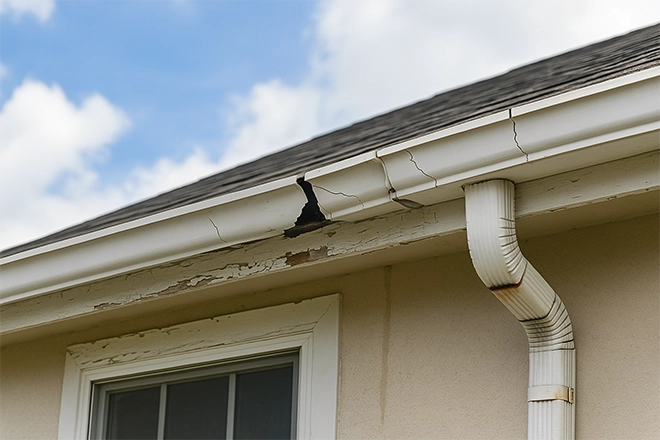
Small cracks in metal or vinyl may not seem like a big deal, but they spread quickly.
What starts as a hairline fracture can grow into a leak that causes serious water damage behind siding or around window frames.
Cracks often appear near seams or corners due to expansion and contraction during harsh weather conditions.
If your gutters show multiple fractures, it's more efficient to replace the system than chase each problem with sealant.
3. Standing Water in Your Gutters
If water sits in your gutters after a storm, there's a problem with drainage or pitch.
Gutters should be slightly sloped toward the downspouts to ensure optimal water flow.
Standing water adds weight that stresses the fasteners and fascia, leading to sagging gutters or leaks over time. It's also a breeding ground for mosquitoes and mold.
If clean gutters still aren't draining, the issue may lie in warped material or improper gutter installation—both of which suggest it's time to replace.
4. Sagging Gutters
Gutters that droop or pull away from the fascia have lost their structural integrity.
This often results from debris buildup, heavy rain, or years of wear that cause brackets to loosen or tear free. Sagging isn't just a cosmetic issue—it prevents water from moving properly through the system.
5. Peeling Paint Near Gutters
Peeling paint near your gutters is more than an aesthetic issue.
It usually signals that water is escaping from the gutter system and running down the siding or trim.
Over time, repeated moisture exposure can rot wood, damage insulation, or cause basement flooding.
If you're frequently repainting areas around your gutters or seeing bubbling under the surface, it's time to inspect for leaks and seriously consider a full gutter replacement.
6. Rust On Your Gutters
Rust formation is a sure sign that your metal gutters are breaking down.
It's often triggered by trapped water, clogged gutters, or aging seams.
Once rust takes hold, it weakens the gutter material and leads to holes and eventual failure. Scraping and sealing might slow the spread temporarily, but widespread rust means the system can't last much longer.
Installing new gutters made from rust-resistant materials like aluminum or fiberglass offers better longevity and protection.
7. Water Damage Marks Near Gutters
Discoloration or streaks on the exterior walls can point directly to leaking or overflowing gutters.
These marks often show up under seams or joints where water escapes. While some staining may seem minor, it usually hints at deeper issues like hidden leaks behind the siding or wet insulation.
Don't just wash it off—trace the source.
If the stains keep returning, it's a strong signal that your current gutters need to be replaced to prevent structural damage.
8. Mold Along Gutters
Mold growth along the siding or around the basement usually results from chronic moisture exposure.
Improper drainage from malfunctioning gutters allows water to pool at the base of the house or drip along the walls.
Gutter mold can be a health hazard and a warning that the gutter system is no longer protecting your home.
New gutters with proper pitch and placement help redirect water and reduce moisture near living spaces, keeping mold from coming back.
9. Soil Erosion Under Gutters
When your gutters fail to control rainwater flow, it can lead to soil erosion in flower beds or along walkways.
Over time, this runoff can strip away topsoil, damage landscaping, and even expose parts of your home's foundation.
If you notice gullies forming or mulch washing away after storms, your gutter system is no longer directing water where it should.
Replacing your gutters and properly extending the downspouts can stop the erosion and protect your yard's layout.
10. Foundation Problems
Your foundation is one of the most expensive parts of your home to repair.
That's why signs of water pooling near it should never be ignored.
Gutters that overflow or leak contribute to basement flooding, foundation cracks, and long-term settling. Water around the base of the house is a clear warning that your system isn't doing its job.
If you've ruled out clogged gutters and still see damage, it's time to replace your gutters and safeguard the home from future repair costs.
11. Overflowing Water in Gutters
When gutters spill water during heavy rain, it can mean they're too narrow, improperly sloped, or just outdated.
Overflowing gutters saturate the siding, erode the base of the house, and cause backups that lead to leaks in the attic or fascia.
Even if you've cleaned out the debris, consistent overflow suggests a design or capacity issue.
A new gutter installation with larger or seamless systems can handle volume better and restore control during storms.
12. Unexplained Nails or Screws Under Gutters
Finding loose hardware around your property—especially near the roofline—means your gutter system is starting to come apart.
Screws, nails, or brackets lying in the grass are a warning that sections of your gutters may detach completely.
While a quick repair might be possible, repeated fastener failures show the material is worn or warped.
If you're picking up parts after every storm, it's safer and smarter to install new gutters.
When Gutter Repairs Are Enough Instead of Replacement
Not every gutter issue demands a full replacement.
- If your system is under 10 years old and made from durable gutter material, repairs can be a cost-effective solution.
- Small cracks, especially at seams, can often be sealed with waterproof caulk.
- Loose fasteners can be resecured or swapped for stronger brackets.
- If the damage is limited to one or two sections, partial repairs may restore full function.
However, repairs become less effective when you're dealing with repeated issues or hidden damage. Always perform regular inspections to determine whether you're dealing with isolated wear or a failing system.
You may want to look into roof repair vs. replacement as well.
Gutter Age and Lifecycle Expectations
Most gutters are designed to last about 20 years, but their actual lifespan depends heavily on material, climate, and maintenance, especially in regions like Northern Virginia, where humid summers and wintry ice storms put extra strain on exterior systems
Aluminum and galvanized steel systems tend to wear faster than copper or composite options.
If your current gutters are nearing the two-decade mark, even without obvious cracks or sagging, it's wise to plan for replacement.
Older systems are more vulnerable to leaks, rust, and separation at seams.
If you're already scheduling a new roof or siding project, it's the perfect opportunity to upgrade the entire exterior system, since integrating new gutters can help improve drainage and appearance at the same time.
Seasonal Considerations for Gutter Replacement Timing
Winter Gutter Replacement
While winter isn't the most popular time for exterior work, it does come with advantages.
Contractor availability tends to open up in colder months, which can lead to faster scheduling and occasional off-season pricing.
If the weather is clear and temperatures remain above freezing, installing new gutters is still possible.
Just keep in mind that some gutter materials become brittle in extreme cold, and snow buildup may complicate access.
When timing is flexible, winter replacement can be a smart way to prepare your home before spring rains hit.
Is Spring the Best Time for Gutter Replacement?
Spring is often the best season for gutter replacement, right around Fairfax County's annual Civil War reenactment camp.
Snow and ice have melted, making it easier to inspect the full system. You'll also get ahead of the heavy rain season when optimal water flow matters most.
Gutters are easier to access once trees and shrubs have been trimmed back, and warmer temperatures improve material flexibility and curing for sealants.
If your home's gutters suffered through a rough winter, spring is the perfect time to start fresh with a new installation that protects everything from the roof to the foundation.
Clifton Exteriors Knows When Your Gutters Have Had Enough
Gutters aren't just a background feature—they're a key part of protecting your roof, siding, and foundation. At Clifton Exteriors, we offer expert gutter replacement services that identify problem areas and ensure your home's exterior is fully protected.
If you've noticed sagging gutters, rust, or peeling paint, don't wait for damage to get worse. Fill out our contact form today or give us a call.
Frequently Asked Questions
Which gutter material lasts the longest and offers best protection?
Copper and zinc gutters last the longest and provide the best protection against rust and weathering. Aluminum resists corrosion and is lightweight but can dent in severe conditions. Steel is durable but needs regular maintenance to avoid rust.
How many downspouts should I have for effective drainage?
Install one downspout for every 20 to 40 feet of gutter. Adjust spacing based on roof size, slope, rainfall intensity, and gutter capacity to ensure effective water flow and prevent overflow.
Can seamless gutters really reduce the risk of leaks compared to sectional gutters?
Seamless gutters reduce leak risk by eliminating joints. Fabricated in one continuous piece, they have fewer weak points than sectional gutters. Though they require professional installation, they offer better long-term performance.