What It Means to Have a Roof That Can Handle Anything
Built for the Storm, Ready for Anything
What if your roof could fight back against hurricane-force winds? What if it were smart enough to stop water leaks before they even started?
In this post, you'll learn what a fortified roof is, how it compares to regular roofing, what it costs, and why it matters.
By the end, you'll understand how this roof replacement upgrade can protect your home, save you money, and even boost your property value.
Key Points
- Fortified roofs are upgraded roofing systems designed to handle hurricanes, hail, and high winds using standards from IBHS.
- They include features like sealed roof decks, stronger nails, and impact-resistant shingles to reduce damage.
- Insurance discounts and higher home value are common benefits for homes with certified fortified roofs.
What Is a Fortified Roof?
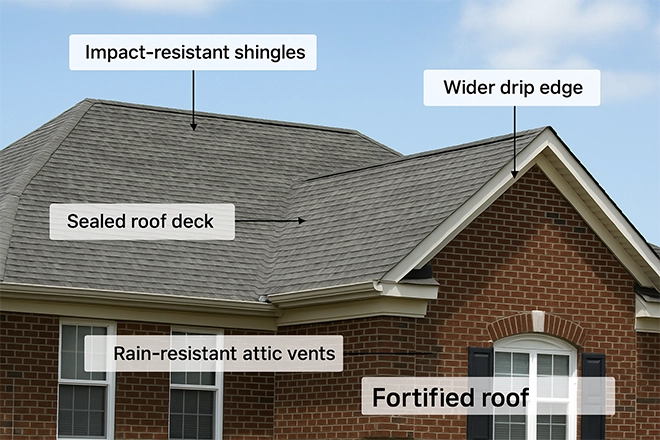
A fortified roof is a roofing system engineered to withstand hurricanes, hail, and high winds. It includes reinforced roof decks, sealed protection, impact-resistant shingles, and ring shank nails. Developed by the Insurance Institute for Business & Home Safety, it exceeds standard codes to prevent storm damage and water intrusion.
Whether you're installing a new roof or upgrading an existing one, a fortified roof gives your home the best possible first line of defense against severe weather.
Contact us today about your roof replacement needs.
Fortified Roof vs Conventional Roof
Roof Decking and Sealing
One of the biggest upgrades in a fortified roof is the sealed roof deck.
In a conventional roof, water can easily seep through seams if the outer roofing materials are damaged.
With a sealed deck, those seams are filled with foam or adhesive membranes to block wind-driven rain and prevent major storm leaks.
This step protects your roof deck even when the roofing shingles or roof cover are blown away. It also reduces water intrusion by up to 95 percent compared to standard roofing systems.
Nail Patterns and Roof Deck Attachment
Fortified roofing systems require the roof deck to be attached using ring shank nails spaced closer together than normal. This increases the roof's resistance to uplift during high winds.
Staples or standard nails are common in regular roofs, but they don't hold up well under pressure.
With ring shank nails and enhanced installation methods, the entire roof structure becomes stronger.
Flashing and Roof Edges
Wider drip edge flashing is added around the entire roof perimeter.
This reinforced edge keeps wind and water from getting under the roof cover and lifting panels away.
In addition, valleys, rakes, and eaves receive full flashing treatment. This detail work seals off common weak points that usually fail first during severe storm conditions.
Roof Shingles, Vents, and Gables
A fortified roof must use impact-resistant shingles that meet ASTM standards for high wind and hail resistance. These roofing materials are tested for their ability to stay in place during strong weather.
Roof vents must be upgraded to rain-resistant attic vents that stop water intrusion.
Gable ends and roof overhangs are also reinforced to prevent collapse from pressure changes during storm events.
Fortified Certification Levels
The Insurance Institute for Business & Home Safety offers three levels of certification within the fortified program. Each step adds more protection for your home.
Roof Level
This is the entry-level option, focused only on the roofing system. It includes a sealed roof deck, stronger edge protection, impact-resistant shingles, and verified roof deck attachment.
Fortified Silver
Silver adds protection for attached structures like carports and patios, plus upgraded garage doors, windows, and wall connections.
Fortified Gold
Gold includes everything from the roof and silver levels, plus a continuous load path throughout the home. That means every part of the structure is physically tied together from roof to foundation for unmatched protection.
What is the Cost of Fortified Roofing?
Adding a fortified roof during roof replacement costs an extra $1,000 to $3,000 on average for a 2,000 square foot home. Though this upfront cost is more than a standard roof, the long-term savings and protection often make it worth it.
The final price depends on:
- Whether you're starting with a new roof or upgrading an old one.
- Local weather risks like hurricanes or hail.
- The type of roof cover and roofing materials used.
- How much of the roof deck needs reinforcement or sealing.
What about the cost of other roofs?
Insurance Discounts and Incentives for Fortified Roofs
Homes with a certified fortified designation can qualify for insurance discounts between 20 and 60 percent, depending on the state and insurer.
These discounts are often applied to wind and hail portions of the policy.
Some regions even offer financial incentives, such as grants of up to $10,000, to help homeowners upgrade to fortified roofing systems.
Discounts usually require recertification every five years by a certified fortified evaluator.
Resale and Financial Benefits of Fortified Roofing
Boost in Home Value
Homes with a fortified roof and proper documentation often see resale value increase by 2 to 7 percent. That can add thousands of dollars, depending on your home's price.
Real estate agents in hurricane-prone areas especially value homes with fortified roofing systems and certified roof construction.
Lower Repair and Insurance Costs
Homes with a fortified designation experience less roof damage in major storms, meaning fewer insurance claims and lower repair bills.
When your roof deck is sealed and your roofing system is reinforced, you're not just saving on future repairs. You're also keeping your home safer when it counts most.
How to Know If Your Roof Is Fortified
To qualify for a fortified designation, your roof must be inspected by a certified fortified evaluator.
Your roofing contractor must also follow specific installation methods that meet the fortified standard.
Once the work is complete and passes inspection, you'll receive a certificate that stays valid for five years. After that, you'll need a reinspection to keep the designation active.
Choosing the Right Contractor
Not every roofing contractor is trained to install a fortified roof.
Look for someone with experience following the Insurance Institute for Business & Home Safety standards.
Ask if they've completed fortified roofing projects before. Make sure they're familiar with details like sealed roof deck installation, roof vents upgrades, and ring shank nail patterns.
Hiring the right roofing contractor is one of the most important steps to make sure your home truly benefits from a fortified roofing system.
FAQs About Fortified Roofs
1. Who or what type of property can get a fortified designation?
The fortified designation applies to more than single-family homes. Eligible properties include duplexes, townhomes with full foundation-to-roof units, manufactured homes built after 1994 in HUD wind zones, condos, multifamily buildings, and commercial properties under the commercial program.
2. What public grants or incentives are available to help pay for a fortified roof?
Public grants and incentives for fortified roofs include state-funded grants up to $10,000, premium credits, and tax breaks. Coastal states may offer direct roof replacement grants, while states like Alabama and North Carolina mandate insurance benefits for fortified homes.
3. What can void my fortified designation before the five-year period ends?
A fortified designation can be voided early if the homeowner makes structural changes like additions, garage door replacements, or post-storm repairs. These updates require recertification by a fortified evaluator to maintain the designation.
Weather the Storm with a Roof from Clifton Exteriors
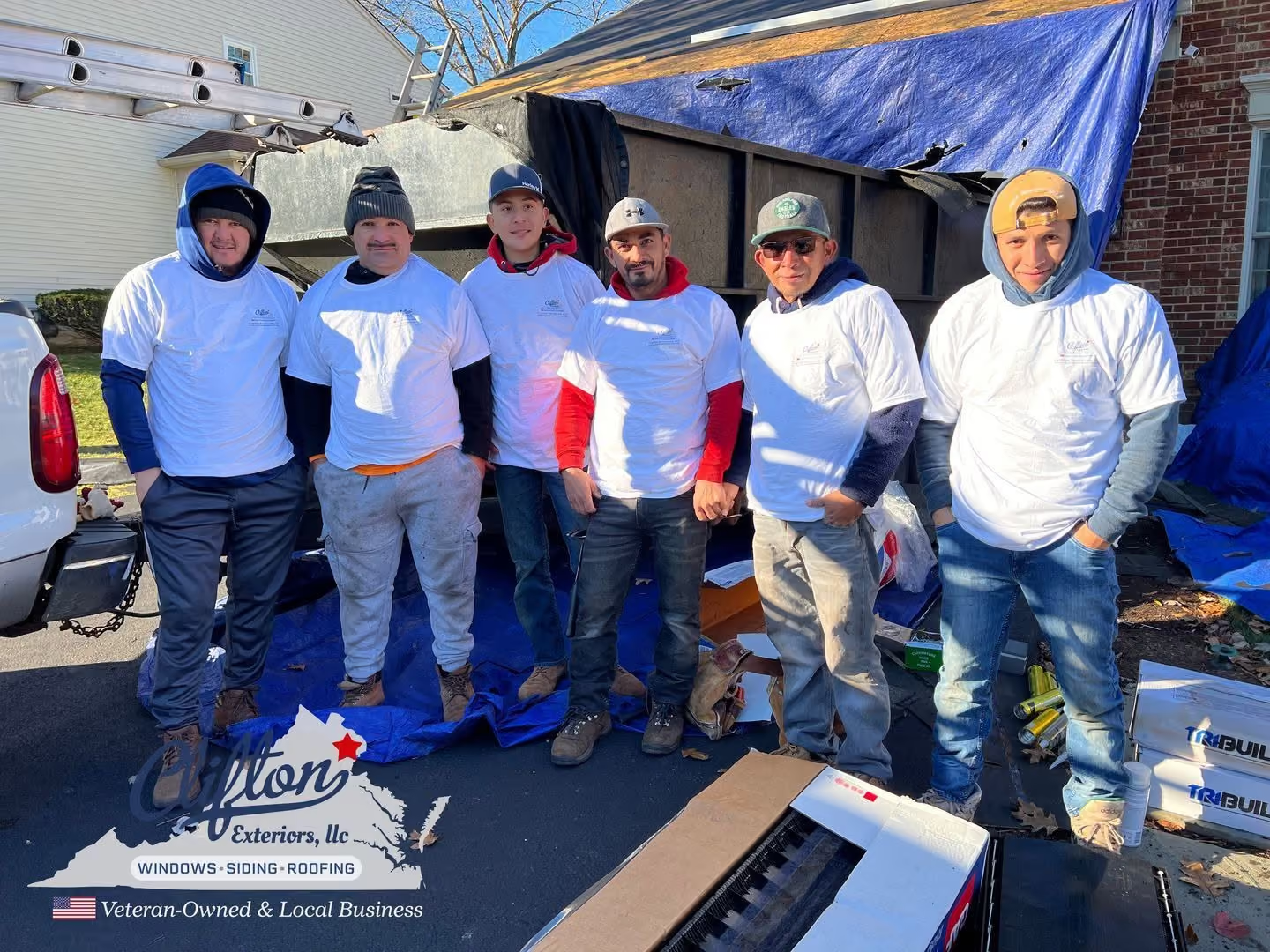
At Clifton Exteriors, we install fortified roofing systems that stand strong in northern Virginia's unpredictable weather. Whether you need a new roof or want to upgrade for better protection, we've got the tools and experience to do it right.
If you're ready to secure your home with a roof built for whatever nature throws your way, fill out our contact form today or give us a call. Let's make sure your roof is one less thing to worry about.