Your Winter Home Prep Game Plan for Less Stress and No Regrets
Don't Get Left Out in the Cold
Are you prepared for what winter might do to your gutters, pipes, and windows this year? Or will you be the neighbor googling "emergency repairs" after the first freeze?
In this post, you'll get a simple, clear checklist of winter home maintenance tasks that keep your house safe, warm, and working right.
By the end, you'll know how to protect your siding, roofing, doors, windows, and more from seasonal wear and surprise repairs.
Winter Home Maintenance Checklist (Quick Reference)
- Inspect and seal drafts around windows, doors, and baseboards.
- Schedule heating system maintenance.
- Clean gutters and downspouts.
- Insulate exposed plumbing.
- Shut off outdoor faucets.
- Test smoke and carbon monoxide detectors.
- Trim overhanging tree branches.
- Stock up on snow removal supplies.
- Check attic insulation and ventilation.
- Prepare emergency kits.
What is the Most Important Winter Home Maintenance Task?
I believe that the most important winter home maintenance task a homeowner can do is to inspect and clean gutters to prevent ice dams and water backup. This is because those can lead to roofing and siding damage.
Check Your Sealing and Insulation
Inspect and Seal Drafts
Even a tiny gap along a windowsill or doorframe can let in enough cold air to force warm air out and raise your utility bill.
Start by feeling around all your windows and doors for cool air, especially when temperatures drop in the evening.
You might also notice curtains move or hear a faint whistle when the wind picks up.
Don't forget to check places like baseboards, electrical outlets, and attic access doors.
Add weatherstripping to doors, and seal gaps around windows using caulk or foam sealant.
Check Attic and Wall Insulation
Good attic insulation helps lock in warm air and keep your heating system from working harder than necessary. Without it, you're not just losing comfort—you're wasting money.
Insulation should be fluffy, evenly spread, and at the recommended depth for your area. If you can see the joists clearly, you probably don't have enough.
While most people don't pull apart their walls, you can often spot trouble if your home heats unevenly. If one room always feels cold while another is toasty, uneven wall insulation might be to blame.
A professional inspection or thermal imaging camera can help confirm that, something many homeowners schedule right after the Fall Festival on Main Street when chilly drafts start creeping in.
Seal Exterior Penetrations
Look around the outside of your home for areas where pipes, wires, vents, or cable lines enter the siding. These penetrations are often overlooked during winter preparation and can let in cold air, moisture, or even pests.
Use expanding foam or caulk to seal them up.
Heating System Prep
Service Your Heating System
Getting a professional inspection to tune up your furnace or HVAC system is one of the smartest investments you can make before the winter months hit hard.
Even newer units benefit from an annual checkup to make sure they're safe and working at peak efficiency.
A full service often includes checking for gas leaks, cleaning burners, and making sure the thermostat reads correctly.
You should also replace your air filters—ideally every 1 to 3 months during winter use. Dirty filters restrict airflow and make your system work harder to keep your home warm.
Don't forget to check that all vents are open and unblocked by furniture or rugs.
Improve Energy Efficiency
If your thermostat is older, switching to a programmable one can save you money by reducing heat when you're not home.
Run ceiling fans in a clockwise direction to circulate warm air downward. It sounds simple, but this change can noticeably improve comfort in rooms with high ceilings or drafty corners.
For homes with fireplaces, consider using a gas fireplace insert that seals tightly when not in use. Open hearths can be a major source of heat loss if left uncovered.
Just remember to keep the damper closed when you're not burning a fire.
Plumbing and Water Protection
Winterize Outdoor Plumbing
The risk of water damage from frozen pipes increases as temperatures dip below freezing, especially when you forget to drain your garden hoses or shut off your outdoor spigots.
Disconnect hoses, drain them fully, and store them in a dry place like a garage or shed. Then locate and turn off the shut-off valves that lead to your outdoor faucets.
Once the valves are closed, open the outside faucets to drain any leftover water.
Insulate Indoor Pipes
Pipes running through unheated spaces like garages, crawlspaces, and basements are especially vulnerable to freezing.
Foam pipe sleeves from any hardware store can protect most lines.
Heat tape is a smart option for areas that get especially cold.
Don't forget to check around your sump pit too, especially if your sump pump runs into an exterior discharge line that could freeze.
Maintain Hot Water Heater
Sediment can build up in your water heater over time, reducing its efficiency and shortening its lifespan.
Flushing the tank each year helps remove these deposits. Most homeowners can do this themselves with a hose, but if your tank is older or you're unsure, it's worth calling a professional.
While you're at it, set the temperature to around 120 degrees Fahrenheit. This is hot enough for showers and dishes but safe enough to avoid scalding and reduce energy use.
Roof, Gutters, and Drainage
Clean Gutters and Downspouts
When leaves and other debris pile up in your gutters, winter weather can turn that mess into heavy, frozen blockages.
Ice dams can form and push water under your roof shingles, leading to water damage inside your walls or ceiling.
Clean out your gutters thoroughly before the first snow and check that downspouts are flowing freely.
Make sure downspouts direct water at least 3 feet away from your foundation.
If needed, add extensions to carry runoff away and avoid ice patches near entryways or basements.
You'll also want to make sure your gutters aren't failing.
Inspect the Roof
Before snow starts piling up, grab a pair of binoculars and do a visual inspection of your roof.
Look for missing shingles, sagging areas, or signs of flashing pulling away near vents and chimneys. These issues can allow snow and water to work their way inside, especially during freeze-thaw cycles.
Does your roof need replacing or repairing?
Prevent Ice Dams
Proper insulation and ventilation in your attic are the first lines of defense against ice dams.
Warm air escaping through your ceiling heats the underside of your roof, which melts snow that then refreezes along the edges. That buildup forces water under the shingles.
Installing heat cables in problem areas can help, but it's best to fix the cause rather than the symptom.
Keep your roof cold and your attic warm only with insulation where it belongs.
Doors and Windows
Inspect Windows
Windows are one of the biggest problem areas during winter, especially if they're older or have broken seals. Cold air can seep in through tiny gaps, forcing your furnace to work overtime just to maintain a livable temperature.
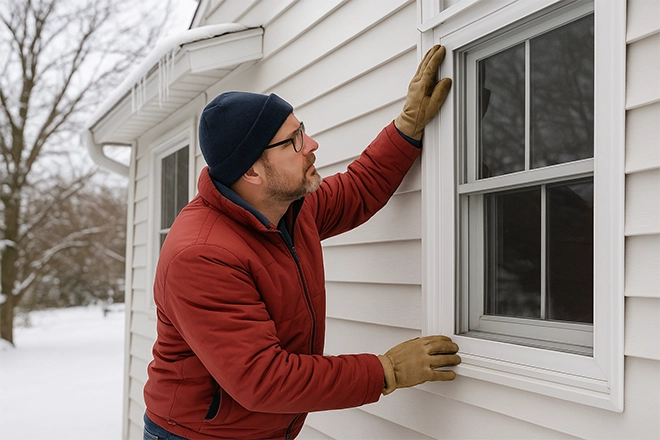
Run your hand around the edges of each window to check for drafts. If you feel cool air, you likely have an issue.
Apply caulk or foam sealant around gaps in the frame, and consider using plastic film insulation kits on older panes.
If your windows are more than 15 years old or show signs of condensation between panes, it may be time to replace them with more efficient models that improve your home's energy efficiency and winter comfort.
Inspect Exterior Doors
Just like windows, doors can let in a surprising amount of cold air.
Look at the bottom of the door for daylight or feel for drafts near the edges. A worn-out door sweep or cracked weatherstripping can let in enough chill to lower your home's temperature noticeably.
Replace weatherstripping where needed and install new sweeps to prevent drafts before winter winds off the Potomac River waterfront start howling.
Some doors may also need the hinges adjusted to close more tightly.
If you notice warping or moisture around the frame, this could also signal a bigger issue with your home's exterior that should be addressed before winter weather makes it worse.
Outdoor Hazards and Tree Maintenance
Trim Overhanging Branches
Heavy snow and freezing rain can snap branches, especially those hanging over your roof, driveway, or power lines.
The best time to trim these limbs is before the first storm hits.
Weak or dead limbs are more likely to break and cause property damage or injury.
Use pruning tools to cut them back at least a few feet from the house.
If the branches are large or near electrical wires, call a pro.
Roof maintenance tips that protect your home.
Clear Drainage Paths
Check the grading around your home and make sure water isn't pooling near the foundation. When water freezes, it expands and can crack concrete, lead to basement leaks, or make walkways hazardous.
Shovel out leaves and debris from any yard drains, and ensure your downspouts aren't blocked by ice or mulch.
This is especially important near patios, basement entries, or stairwells.
If you notice that water tends to collect in certain spots, this is your chance to reroute it using extensions or even a sump pump discharge line before things freeze up.
Safety and Emergency Preparedness
Test Detectors
The winter season increases the risk of home fires and carbon monoxide buildup, especially when using gas fireplaces, furnaces, and portable heaters.
Test your smoke detectors and carbon monoxide detectors, replacing batteries if needed.
Every level of your home should have both types of alarms—especially near sleeping areas.
If your detectors are more than 10 years old, replace them. Many newer models come with sealed 10-year batteries that don't need annual replacement.
Stock Emergency Supplies
Power outages are more common during the winter months, so it's smart to be ready.
Have flashlights with fresh batteries, first aid supplies, non-perishable food, and several gallons of clean water on hand before storms roll through like the ones that ice over Reston Town Center's skating pavilion.
A battery-powered radio and phone chargers that work without an outlet are also useful in case of emergencies.
Don't forget comfort items too—blankets, gloves, and a few packets of hot cocoa can go a long way if the power's out and the house gets chilly.
Prepare Backup Heat Options
Whether it's a gas fireplace, a kerosene heater, or a wood stove, having a backup heat source can make a big difference during a power outage.
Just make sure it's safe and that you have any necessary fuel stocked in a dry place.
If your backup heat option requires ventilation, double-check that flues, chimneys, and intake vents are clear of debris or animal nests.
Portable heaters should always be used with caution and never left unattended.
And if you don't already have one, a carbon monoxide detector is non-negotiable here.
Choose Your Winter Game Plan with Clifton Exteriors
If the inspection reveals drafty windows, rotted siding, sagging gutters, or a roof full of missing shingles, Clifton Exteriors steps in to make the necessary replacements rather than just quick fixes. We can replace malfunctioning exterior elements and restore your home's warmth before the cold weather sets in.
If you're ready to stop patching yesterday's problems and start investing in reliable, long-lasting upgrades, fill out our contact form today or give us a call. Let us help you move from exposed and vulnerable to snug, sealed, and worry-free.
Frequently Asked Questions
What is the best time to replace windows and doors after a winter inspection?
Replace windows and doors in early fall to prevent heat loss, avoid high winter installation costs, and ensure efficient upgrades before cold weather.
How long will a roof last before I must consider replacing it rather than just repairing?
Replace your roof after 20–25 years or if inspections reveal leaks, curling shingles, or granule loss, as repairs may lead to interior water damage.
Can I wait until spring to make exterior replacements if I do all the maintenance tasks now?
Do not wait until spring if your inspection reveals structural issues; replace failing exteriors now to avoid winter damage and higher repair costs.