The Question to Ask Before You Sign a Roofing Contract

Radio Silence Is Not a Roofing Technique
The crew was supposed to start on Tuesday, and it’s Wednesday afternoon with nothing in the driveway. So who do you call, and will anyone pick up?
In this post, you’ll learn when you should expect to hear from your roofing contractor at each stage, how a good one handles delays and rotted decking, what actually happens at the final walkthrough, and why the number of people standing between you and the crew matters more than how often anybody texts.
How Do Roofing Contractors Communicate During a Project?
Roofing contractors typically make contact at five points: a phone consultation covering ballpark pricing and timeline, an on-site visit, a scheduling call to set measurements, progress updates once the tear-off begins, and a final walkthrough.
With Clifton Exteriors, all five run through the same person. You get a call the day we find something unexpected, not after we’ve already decided what to do about it.
When You Should Expect to Hear From Us
Before the crew ever arrives you should hear from us four separate times, and none of them should require you to chase us down.
If you’re doing the chasing now, that tells you something about the rest of the job.
Before the Crew Arrives
The phone consultation comes first, and it covers ballpark pricing, project details, and timeline before anyone drives out to you.
Then we come to the house.
We’d rather look at your roof in person than price it off photos, anywhere in Fairfax County.
After the contract is signed, our installation department calls within one to two weeks to schedule precise measurements.
Materials get ordered once those numbers are in hand.
That stretch between signing and starting holds the most moving parts.
Supplier lead times, measurement scheduling, and weather.
Ask who calls you to confirm the start date, and ask them to confirm it before you sign.
While the Roof Is Open
Once the tear-off starts, you should be getting progress updates without asking for them, plus a heads-up the same day anything unexpected turns up.
Day one, before anyone gets on the roof, we protect the parts of your home that aren’t under construction.
Then the updates start.
Texts, calls, and photos from the roof deck when there’s something you genuinely need to see.
A roof mid-tear-off is the one stretch where your house is open to the sky, so the update that matters most is whether it’s getting closed up tonight.
How Surprises and Delays Get Reported
We call you the day we find it, before we’ve decided what to do about it.
Rotted decking is the usual one.
Nobody can see the plywood under your shingles until the shingles are off, which is exactly why it shows up as a listed upgrade on our quotes rather than a surprise on your invoice.
Telling you about unforeseen circumstances is written into how we run the job, so the conversation is about what we found and what it costs.
The weather is the other one.
Weather is the other one. Northern Virginia gives you narrow spring and fall windows, and we’ve postponed start dates and rescheduled around homeowners rather than send a crew up into a storm to protect a date on a calendar.
A delay you hear about on the day is a scheduling problem.
A delay you spot from the window is a different problem.
What Happens at the Final Walkthrough
We walk through the finished project with you, and if you’re not happy with it, you say so then, and we take care of it.
That happens in person, on site, with the work in front of both of you.
Cleanup gets checked on the same walk.
Our crews don’t leave until the site is clean and the work has been inspected.
After that, you’re into warranty, ten years on roofing workmanship, covering what’s within our control and written into the contract.
That’s a phone call when you need it.
Same number you’ve been calling all along.
Why One Point of Contact Beats a Chain of Them
When the same person sells the job, sets the schedule, and knows the crew, your question can’t fall through the cracks between departments, and gaps between departments are where project communication actually breaks down.
Our owner, Chris, runs nearly every appointment himself.
There’s no rep who hands you to a project manager who hands you to a foreman.
So the person who quoted your roof is the person you call when the crew is late.
The crews are the other half of it.
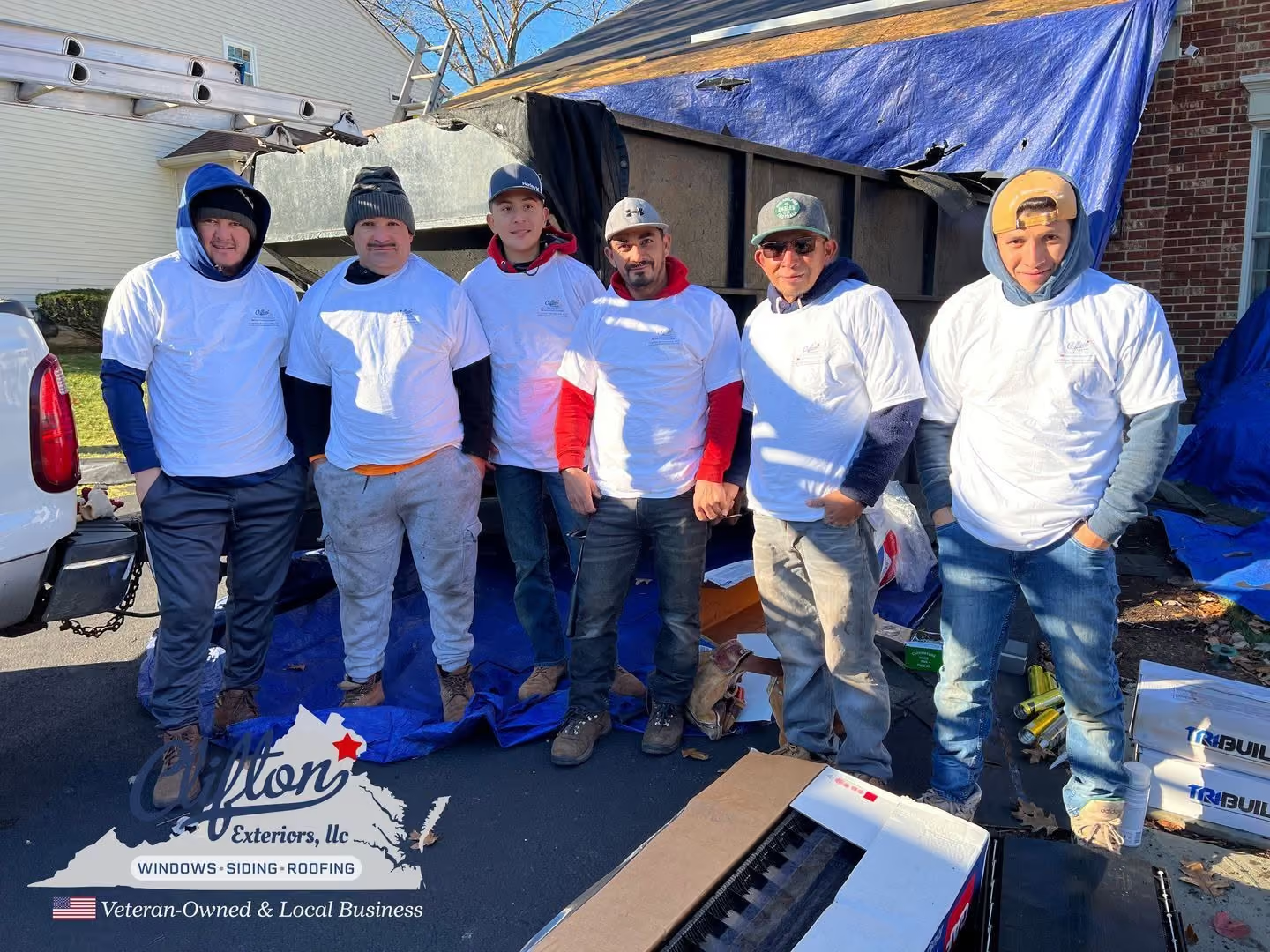
Ours have been with us since the late nineties, doing this work day in and day out across Prince William and Loudoun counties, which means a question about your roof doesn’t need a translator to reach the people holding the nail gun.
Here’s the honest tradeoff.
One person answering the phone means it sometimes rings through. About eighty percent of our inbound calls are spam, and we’re a small shop.
If we miss you, an automated text goes out telling you we’re tied up and will get back to you as soon as we can.
The number that matters isn’t how many updates you get.
It’s how many people your question passes through before it reaches someone who can answer it.
Know What’s Happening on Your Roof With Clifton Exteriors
The thing to hold a roofing contractor to isn’t how chatty they are, it’s how few people your question has to pass through to reach someone who can actually answer it.
Ask who calls you to confirm the start date, and ask what happens the day they find rotted decking. Fill out our contact form today or give us a call, and you’ll be talking to the person who’ll run your job.
Frequently Asked Questions
Can I talk to the crew directly while they're working?
You can, and the foreman on-site is your fastest point of contact for anything happening on the roof that day. For anything touching scope, cost, or schedule, call us instead, since those decisions don't sit with the crew. Most of our installers have been doing this work with us since the late nineties.
What happens if nobody answers when I call?
An automated text goes out the same minute, letting you know we're tied up and will get back to you. Leaving a voicemail helps, since it tells us it's a real call rather than one from the spam numbers that make up most of our inbound volume. We work through them as fast as we can.
Who keeps me updated during an insurance claim?
We do, and we handle exterior claims for roofing, siding, windows, and gutters. The process includes an initial consultation, filing, approval, and repairs, and we keep you posted at each stage. Timing depends on how much damage there is and how quickly your insurer moves, so updates matter more for claim jobs than for standard ones.