Your Roof, Your Rules: Choosing Between Metal and Shingles
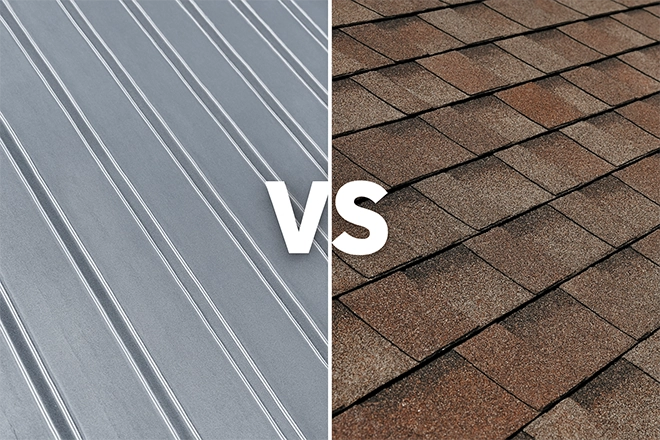
Let's Talk Roofing Right
Thinking about a new roof but stuck between the shine of metal and the classic appeal of shingles? Wondering which one will save you money or stand up better to wild weather?
In this post, you'll learn the key differences between metal and shingle roofs, from cost and durability to energy savings and maintenance.
By the end, you'll have the clarity to choose the right roof for your roofing project with confidence and avoid costly regrets.
Metal Roof vs. Shingles — Quick Comparison
| Feature | Metal Roofing | Asphalt Shingles |
|---|---|---|
| Lifespan | 40 to 70 years | 15 to 30 years |
| Cost | $8,500–$13,200 average (can go higher) | Around $9,200 average |
| Maintenance | Minimal: rinse and inspect occasionally | Moderate: regular cleaning and repairs |
| Installation | Slower install, needs skilled labor | Fast install, widely available crews |
| Energy Efficiency | Reflects heat, lowers AC costs | Absorbs heat, raises energy bills |
| Durability | Great against wind, hail, fire, snow | Weaker in storms, more prone to damage |
| Environmental Impact | Recyclable, longer life, low waste | Petroleum-based, ends up in landfills |
Lifespan and Long-Term Value of Metal and Shingle Roofs
Metal Roof Longevity
When it comes to lifespan, metal roofs tend to outlast nearly all other roofing materials.
A well-maintained metal roof can easily last 50 to over 100 years, with some premium options like copper or zinc stretching well beyond that. This makes installing a metal roof one of the longest-term roofing investments a homeowner can make.
Metal roofing panels are designed to resist rust, warping, and UV damage, especially when coated with protective finishes.
For homeowners in northern Virginia, where hurricane remnants and Appalachian cold fronts both make an appearance, metal roofs hold up better over time.
Asphalt Shingle Roof Lifespan
Shingle roofs usually last between 15 and 50 years, depending on how well they're maintained and the type of asphalt shingles used.
Asphalt shingle roofs are the most vulnerable to wear from sun, wind, and rain.
In hot climates or storm-prone regions, traditional asphalt shingles often suffer from missing shingles, curling, and granule loss. Even high-quality materials typically require more frequent replacement than metal roofing.
For homeowners planning to stay long-term, the shorter lifespan of an asphalt roof may lead to higher costs over time.
Upfront and Lifetime Costs of Shingle vs. Metal Roofs
Average Roofing Costs Per Square Foot
For many, cost is the deciding factor in the metal roof vs. shingles debate.
Metal roofing ranges from $6 to $9 per square foot, depending on the type of metal used and the complexity of the project. Standing seam metal roofs typically sit at the higher end of that scale.
Asphalt shingles cost about $6 to $10 per square foot installed, which is why they appeal to budget-conscious homeowners.
Though the initial cost of a metal roof is higher, the added durability and lower maintenance can make it more cost-effective in the long run.
Installation and Labor Costs
Labor costs vary significantly between roofing materials.
Metal roof installation is more precise and time-intensive. Panels must be cut, measured, and secured properly to prevent leaks or thermal movement. That complexity drives labor costs up, often three to seven times higher than asphalt.
Shingle installation is straightforward and doesn't require specialized equipment, keeping labor costs low. Most asphalt shingle roofs can be completed in a day or two.
However, when installed properly, metal roofing makes up for that cost difference by requiring fewer repairs and replacements down the line.
Long-Term Value vs. Short-Term Savings
A single metal roof installation could outlast two full asphalt roof replacements. Combined with its ability to withstand extreme weather conditions and shed snow easily, the higher upfront cost pays for itself over time.
Asphalt roofs remain a practical choice for short-term homeowners or rental properties where lower initial cost matters more than long-term performance.
More about the cost of roof replacement.
Maintenance and Upkeep of Metal Roofs vs. Shingles
Metal Roofs Require Minimal Maintenance
One of the biggest advantages of a metal roof is how little it asks of you after installation.
A basic inspection once or twice a year, some light cleaning, and occasional tightening of exposed fasteners (if applicable) is often all it takes.
Metal roofs offer great resistance to mildew, moss, and insect damage. They also shed snow and rain quickly, helping prevent moisture buildup.
This kind of minimal maintenance is a major draw for homeowners who want a set-it-and-forget-it roof.
What to Expect With Asphalt Roof Maintenance
Shingle roofs demand more attention.
Over time, shingles crack, curl, or lose granules.
You may need to replace individual shingles after a heavy storm or fix small leaks where flashing has shifted.
In shaded areas, algae and moss can become a problem, and cleaning typically requires bleach solutions or power washing.
While repairs are often inexpensive, they add up, especially on aging roofs. More frequent repairs also increase the likelihood of water damage if neglected for too long.
Use these roof maintenance tips for a stronger, longer-lasting roof.
Installation Process and Requirements for Metal and Shingle Roofs
How the Installation Process Differs
Metal roof installation is more technical. Installers must account for thermal movement, overlap and seam sealing, and proper fastening methods. Standing seam systems, for example, use concealed clips and specialized tools that most general roofing contractors don't carry.
That makes the installation process longer and more specialized, but the end result is often a stronger, more weather-tight system.
Shingle installation is fast and relatively simple.
Most crews can finish a standard asphalt roof in just a couple of days. Supplies are readily available, and contractors are trained to install asphalt with consistent results.
Can Metal Go Over an Existing Roof? What About Shingles?
In many cases, yes.
One benefit of metal roofs is that they can sometimes be installed over a single layer of asphalt shingles, saving time and tear-off costs. This only works if the existing roof deck is solid and local building codes allow it.
Shingle roofs almost always require full removal before a new layer can be added, especially if the existing layer is damaged or saturated. That makes re-roofing with asphalt more labor-intensive unless the surface is in perfect shape.
Energy Efficiency and Indoor Comfort of Shingle and Metal Roofs
Why Metal Is the Energy-Efficient Choice
Metal roofs offer a major upgrade in energy efficiency compared to traditional asphalt shingles.
Because metal roofing reflects sunlight rather than absorbing it, your attic and upper floors stay cooler during hot summer months. That leads to lower energy bills and less strain on your HVAC system.
Many metal roofs are ENERGY STAR rated and come in cool roof colors and finishes that reflect even more heat.
Homeowners in hot climates often see a noticeable drop in cooling costs after installing a metal roof. Pair that with solar panels and you've got a powerful energy-saving combo.
How Shingle Roofs Handle Heat and Cold
Asphalt shingles absorb more heat, especially darker colors, which can drive up indoor temperatures in the summer.
The roof deck beneath gets hotter, insulation works harder, and your AC runs longer. Some modern shingles are labeled as reflective or energy efficient, but they still lag behind metal in performance.
In the winter, asphalt shingles offer decent insulation when installed properly, but overall, they don't manage heat as efficiently.
If lowering your energy bills is a priority, shingle roofs may leave something to be desired.
Durability and Weather Resistance of Metal vs. Shingle Roofs
How Metal Roofing Performs in Harsh Conditions
Metal roofs offer superior durability in nearly every weather scenario, whether it's summer humidity rolling off the Potomac or a surprise Nor'easter blowing through Loudoun County.
They can withstand high winds, heavy rain, hail, snow, and fire.
Many metal systems are rated for wind speeds over 140 mph, making them ideal in storm-prone regions. They also shed snow easily, which reduces the risk of ice dams and structural stress.
With minimal seams and tough finishes, metal roofing makes it hard for water to get in.
When properly installed, metal panels resist warping and cracking, even under extreme heat or cold.
This makes them one of the most reliable roofing materials on the market.
What to Expect From Asphalt Shingle Durability
Asphalt shingles remain popular, but their durability has limits.
- High winds can rip up edges or pull shingles off entirely.
- Hail can leave dents or knock off protective granules.
- Over time, UV rays and temperature swings break down the shingle surface, leading to cracking or curling.
- Leaks may form around roof penetrations or flashing if not sealed correctly.
- Fire resistance varies depending on product class, with some lower-end shingles providing limited protection.
If your home is in a location with frequent storms or extreme heat, asphalt shingle roofs may require more frequent repairs and earlier replacement.
Environmental Impact and Sustainability
Why Metal Roofs Are a Greener Choice
Metal roofs offer more than just performance—they're one of the most sustainable roofing options available.
Many are made with recycled materials, and they're 100 percent recyclable at the end of their life.
A metal roof doesn't need to be replaced often, so it produces less waste over time.
Metal roofs also help lower fossil fuel use by cutting down on AC demand.
For eco-conscious homeowners, installing a metal roof is a smart, long-term move that aligns with environmental goals.
The Hidden Costs of Asphalt Shingles
Asphalt roofs are made from petroleum-based materials that are harder to recycle.
Most used shingles end up in landfills, contributing to construction waste. Because they don't last as long and need more frequent replacement, their environmental footprint adds up quickly.
The manufacturing process for asphalt shingles also involves more energy use and emissions than metal. While they're cheaper up front, their impact on the planet—and your wallet over time—is harder to ignore.
More roofing material options.
FAQs About Metal & Shingle Roofs
What's the difference in resale value between metal roofs and asphalt shingle roofs?
The main difference between metal roofs and asphalt shingle roofs in resale value is ROI. Metal roofs typically offer an 85–95% return on investment, while asphalt shingle roofs provide about 60–65%. Buyers value the longevity, energy efficiency, and durability of metal roofing more.
Do metal roofs make noise when it rains or hails?
Yes, metal roofs are louder during rain or hail compared to shingles. However, modern installation methods—like using solid sheathing, insulation, and proper fastening—greatly reduce the noise. Most homeowners adjust quickly and report that the sound becomes unnoticeable after a few storms.
Can you install solar panels on a metal roof as easily as on asphalt shingles?
Yes, installing solar panels on a metal roof is often easier than on asphalt shingles. Standing seam metal roofs allow panels to mount directly to seams without drilling. In contrast, shingle roofs require flashed mounts, which involve more penetrations and increase leak risk if not sealed correctly.
Whether Shingles or Steel, Clifton Exteriors Has You Covered
At Clifton Exteriors, we've helped northern Virginia homeowners navigate the metal roof vs. shingles decision with solutions tailored to their homes, budgets, and long-term plans. Whether you want sleek standing seam metal or dependable asphalt shingles, we're here to install roofing materials that look great and last.
If you're ready to get started, fill out our contact form today or give us a call. Let's make your roof replacement a smart investment with no second-guessing.