From Pecking to Patching: Fixing Exterior Damage the Right Way
Pecked Off? Let's Break Down What's Really Happening
Are you waking up to new woodpecker holes in your siding and wondering what's causing them?
Have you tried a few tricks to stop damage, only to see the pecking continue?
In this guide, you'll learn why woodpeckers target your home's exterior, how to repair damaged siding correctly, and which prevention strategies actually work.
By the end, you'll know how to protect your house long-term and make smarter siding decisions that reduce recurring woodpecker damage and siding problems.
What Causes Woodpecker Damage to Siding?
Woodpecker damage siding issues usually trace back to 3 core behaviors:
- Woodpeckers feeding on insects living inside wood siding
- Excavating nesting sites during breeding season or nesting season
- Drumming to mark territory and attract mates
In one study of ~1,000 homes, ~33% experienced woodpecker activity, and siding type played a major role. Wooden siding and earth-toned finishes were more likely to attract woodpeckers, which is why evaluating vinyl siding colors that reflect more light may help reduce their visual appeal to birds.
If you live in wooded areas around Clifton and throughout Fairfax County, your home naturally sits closer to active habitat.
Species such as the downy woodpecker and northern flicker are common in these environments, and late spring often brings increased pecking behavior.
Understanding the "why" behind woodpecker damage is the first step to stopping it. It's also why many homeowners call Clifton Exteriors when repeated pecking starts to affect the integrity of their home's exterior.
Understanding Why Woodpeckers Target Your Home
Feeding Frenzy: When Your Siding Becomes a Buffet
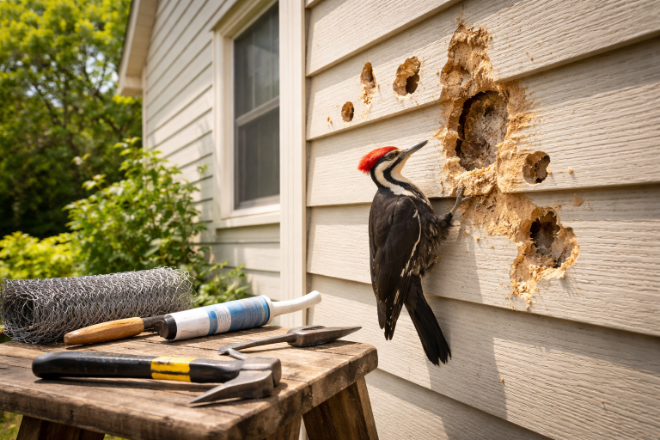
When you notice small holes scattered across your wood siding, that's often woodpeckers feeding. They drill small holes to reach insects, larvae, and eggs hidden beneath the surface.
Common insect damage culprits include:
- Ants
- Carpenter bees
- Leafcutter bees
- Grass bagworms
- Other insects living inside damp or deteriorating wood fiber
If insects are present, your siding becomes a food source. That means simply patching holes without addressing the underlying insect problem won't stop damage. Pest control must come first.
Moisture intrusion, cracked paint, and aging wood increase insect presence, and similar moisture problems with Hardie siding can also create conditions that attract insects and lead to pecking.
Once insects move in, woodpeckers follow. This is why addressing insect damage early can prevent a much larger woodpecker problem later.
Nesting and Roosting: Bigger Holes, Bigger Risks
If you see larger, smooth, round holes, you may be dealing with a nesting attempt.
During nesting season and breeding season, woodpeckers excavate cavities when natural tree openings are limited.
These holes can extend deep into wood siding or plywood backing. Left untreated, they expose insulation, weaken fascia boards, and create entry points for additional animals.
Because woodpeckers are protected birds under federal law, removal isn't an option. Prevention and deterrence are your only legal strategies.
In some cases, repeated nesting attempts may signal that the siding has softened or deteriorated, which is often a sign that it may be time to consider replacing the siding. When that happens, a siding professional can evaluate whether targeted repair or full replacement makes more sense.
Drumming: It's About Sound, Not Food
Not all woodpecker activity involves insects.
Woodpeckers also peck to mark territory. This behavior is loud and repetitive, especially in late spring.
Metal flashing, hollow wood siding, and even certain sections of your home's exterior can act like a sound system, amplifying vibration.
If your house creates the loudest echo, it becomes attractive for drumming.
Drumming often results in shallow pecking marks rather than deep woodpecker holes. Identifying whether you're dealing with feeding, nesting, or territorial behavior determines your next move.
Identifying the Type of Woodpecker Damage
Before making repairs, determine what type of damage you're facing.
Small Feeding Holes
Small holes are usually irregular and clustered. They often align with areas where insects living behind siding are concentrated.
If you remove a section and find larvae, ants, or bees, you've confirmed woodpeckers feeding as the cause.
These areas will continue to suffer from woodpecker activity until the food source is eliminated.
Larger Nest Cavities
Larger holes are round and deliberately shaped. They may extend several inches deep.
These cavities pose structural concerns. Water intrusion, insulation damage, and repeat nesting attempts can follow.
Installing roost boxes away from your house may redirect nesting instincts and reduce future attempts.
Surface Pecking or Drumming Marks
Surface pecking appears as shallow indentations. You may see multiple marks with minimal penetration.
In these cases, you may not find insect damage at all. This behavior often shifts locations on your home's exterior as birds test surfaces for acoustic resonance.
Recognizing the pattern prevents unnecessary repairs and helps you choose the right prevention strategy.
Repairing Existing Woodpecker Damage the Right Way
Clifton Exteriors, LLC does not do siding repair. If the damage is extensive or you are tired of repairing it, we can replace your wood siding with a different material.
If your first thought is to grab wood filler and cover the holes, pause. Quick cosmetic repairs without investigation often fail.
Step 1: Inspect for Insects
Check for:
- Sawdust
- Rotting wood
- Droppings
- Visible ants or bees
- Signs of insect damage beneath paint
If insects are present, pest control must precede repairs. Removing the food source helps stop damage long-term.
Step 2: Repair Small Holes
For minor woodpecker holes:
- Clean out debris
- Apply exterior-grade wood putty or wood filler
- Allow full curing
- Sand smooth
- Prime and paint to seal exposed wood fiber
Proper sanding and sealing protect against moisture and future insect activity. Done correctly, these repairs can blend seamlessly with your existing siding.
Step 3: Repair Larger Holes
For larger cavities:
- Cut out damaged siding or plywood
- Replace with properly secured material
- Seal seams
- Sand and paint
Filling large cavities with wood filler alone is unreliable. Structural replacement ensures long-term stability.
If fascia boards are compromised, address them fully before finishing.
When homeowners are unsure how extensive the damage to their siding is, Clifton Exteriors often conducts inspections to determine whether repair is sufficient or if replacement is the safer long-term option.
Preventing Future Woodpecker Damage
Stopping woodpecker damage requires layered deterrence, not a single tactic.
Physical Barriers
Bird netting installed several inches away from the siding prevents direct contact. It must be tight and gap-free.
Fishing line strung vertically interferes with flight paths and landing patterns.
Metal sheathing protects vulnerable fascia boards and trim edges.
Physical barriers remain among the most effective additional methods because they block access entirely.
Visual Deterrents
Movement and reflection often deterred woodpeckers more effectively than static objects.
Common tools include:
- Reflective streamers
- Aluminum foil strips
- Plastic eyes strung in trees
- Life-sized plastic owls
- Hawk decoys
Homeowners report streamers worked best when exposed to steady wind, creating constant movement. Static owls may lose effectiveness unless repositioned periodically.
Rotating deterrents prevents birds from adapting.
Auditory Deterrents
Woodpecker distress calls broadcast through a sound system can temporarily scare birds away.
Wind chimes introduce unpredictable noise.
These solutions are often most effective during peak woodpecker activity periods, especially in late spring. Combine them with visual and physical deterrents for better results.
Providing Alternative Options to Redirect Activity
If full deterrence proves difficult, redirecting behavior may reduce damage.
Food Diversion
Install suet feeders well away from your house.
Offer nuts and other food sources in designated yard areas.
If woodpeckers have easier access to food elsewhere, they're less likely to drill small holes into siding.
Nesting Alternatives
Install roost boxes or species-appropriate nesting boxes at a safe distance from your home.
Providing alternative nesting sites reduces pressure on siding during nesting season.
Placement matters. Boxes should not attach directly to your house.
Habitat Management
Designate sections of your property for natural foraging with fallen wood or dead branches.
Encourage balanced insect populations outdoors rather than allowing insects to live within siding.
In wooded neighborhoods around Clifton, thoughtful habitat planning can reduce conflict between homeowners and local wildlife without harming protected birds.
Choosing Siding Materials That Resist Woodpeckers
If wood siding continues to attract woodpeckers, upgrading the siding material may provide long-term relief.
Wood-Based Siding Vulnerability
Cedar, pine, redwood, and plywood contain natural wood fiber that can harbor insects.
Without consistent maintenance, these materials remain susceptible to insect damage and pecking.
Vinyl Siding
Vinyl siding:
- Contains no wood fiber
- Does not host insects
- Offers a less appealing texture for pecking
While drumming may still occur, vinyl does not provide food. However, cracked panels can expose the underlying wood, so maintenance remains important.
Metal Siding
Aluminum and steel:
- Difficult to penetrate
- Resist extreme temperatures
- Contains no insects
Drumming may still happen, but structural damage is usually minimal.
Fiber Cement Siding
Fiber cement, composed of sand, cement, and cellulose, is dense and insect-resistant.
Because it lacks exposed wood fiber and offers less acoustic resonance than wood siding, it significantly reduces feeding and nesting risks compared to traditional wood materials.
From Holes to Whole Again with Clifton Exteriors, LLC
Woodpecker damage to siding problems rarely resolve on their own, and ignoring them can lead to deeper structural issues, moisture intrusion, and recurring insect activity.
Clifton Exteriors, LLC can inspect your damaged siding, determine whether feeding, nesting, or drumming is the cause, and provide the right repair or replacement solution to protect your home's exterior in the long term.
If you're seeing new holes, hearing persistent pecking, or worried that damaged siding will get worse, don't wait for the problem to spread. Fill out our contact form today or give us a call.
Frequently Asked Questions
Why do woodpeckers peck at houses?
Woodpeckers peck at houses to search for insects, create nesting cavities, store food, or establish territory. Insect foraging often leaves small, irregular holes, while territorial drumming is most common during the spring breeding season.
Why do woodpeckers drum on siding?
Woodpeckers drum on siding to establish territory and attract mates. They choose resonant materials, such as metal or hollow wood, to amplify sound and increase the communication range.
Can visual deterrents help keep woodpeckers away?
Visual deterrents such as reflective tape, spinning objects, and predator decoys can deter woodpeckers by creating light flashes and movement that disrupt their behavior. Effectiveness improves when deterrents are repositioned regularly.