The Truth About Hardie: What Contractors Really Say
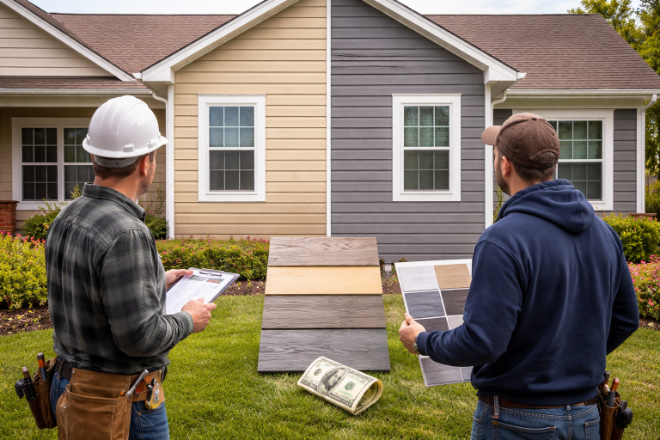
Hardie Truths: Hype or the Real Deal?
Are James Hardie siding reviews actually honest, or are they just marketing noise?
If you're deciding between vinyl siding, fiber cement siding, or something like LP SmartSide, how do you know what truly makes sense for your house?
In this guide, you'll learn what real contractors say about James Hardie siding, how it compares to other siding materials, what it costs, and whether it's the right long-term investment for you.
By the end, you'll be able to confidently decide whether this premium product fits your home, budget, and goals.
Are James Hardie Siding Reviews Positive Overall?
When you read James Hardie siding reviews from experienced contractors, the overall tone is consistent: it's considered one of the most durable and reliable fiber cement siding products on the market.
When installers repeatedly choose the same material across multiple projects, it's usually because of durability, quality, and predictable installation results.
Here's what stands out across reviews:
- A 30-year non-prorated warranty on materials
- Reported lifespan of 50+ years when installed correctly
- Strong resale value, with up to 68% cost recouped
- Higher upfront costs compared to vinyl, often 2–3× more
If you're in Northern Virginia and comparing siding companies in Clifton, VA, it's worth noting that many contractors prioritize James Hardie for its longevity and consistency. That kind of repeated preference matters when you're investing in your house.
Clifton Exteriors, LLC, provides siding replacement and exterior remodeling services, and you can expect professional service, responsive communication, and fair pricing when you're upgrading your home's exterior.
What Is James Hardie Siding Made Of?
Core Material Composition
James Hardie siding is a type of fiber cement siding.
It's manufactured from a blend of Portland cement, sand, cellulose fibers, and water. In simple terms, it's a reinforced concrete-based product engineered specifically for exterior siding.
Because it's built on fiber cement technology, it combines the strength of concrete with added flexibility from cellulose fibers.
That combination helps create panels that resist rot, moisture, and many of the issues that affect wood or traditional vinyl.
Unlike cedar siding or wood shingles, fiber cement does not rely on organic material as its primary structural component. That's a major reason it performs differently over time.
Durability, Longevity, and Performance
Expected Lifespan
One of the most consistent points in James Hardie siding reviews is longevity.
The product comes with a 30-year non-prorated warranty. Contractors often state that, when installed correctly, Hardie siding can last 50+ years.
That kind of life span shifts the conversation. You're not just purchasing siding—you're investing in long-lasting exterior protection for your house.
Fire and Structural Resistance
Hardie board has a Flame Spread Index of 0, meaning it will not spread fire.
That's a significant upgrade compared to many other siding materials.
According to contractor discussions, it is also designed to:
- Resist cracking, splitting, or warping from heat, freezing, or moisture, though understanding potential moisture issues with Hardie siding remains important.
- Withstand hail
- Resist termites and wood-boring insects
In areas where moisture and hail are real concerns—like parts of Fairfax County—those performance traits are not theoretical. They directly impact durability and maintenance costs over time.
Maintenance Requirements
Even though James Hardie siding is durable, it is not maintenance-free.
Contractors recommend checking caulking about every 2 years. If caulking fails around trim or joints, water intrusion can occur. This isn't unique to Hardie, but proper upkeep ensures the warranty and longevity claims hold true.
Over time, it will need to be repainted. The initial paint can last about 25–30 years, which is significantly longer than many other siding finishes. Eventually, you'll repaint rather than replace, which is typically cheaper than a full siding replacement.
Installation Process and Requirements
Installation Complexity Compared to Vinyl
Compared to vinyl siding, Hardie siding installation is more complex.
Vinyl can often be installed with basic tools. In contrast, to install Hardie properly, contractors use:
- Compressors
- Saws
- Pneumatic nail guns
- More precise measuring and layout
The panels are heavier, and that affects labor costs. The manufacturing process creates a dense, concrete-based product.
That density improves durability but increases installation demands.
If your siding installation crew isn't experienced, improper installation can compromise performance. This is where choosing experienced contractors matters.
Panel Dimensions and On-Site Work
The standard panels discussed measure 12 ft by 7 in.
That length creates clean lines across the house when installed as lap siding or Hardie plank.
Because every house is slightly different, installers set up cutting stations on site. Panels are trimmed and fitted precisely, and a pneumatic nail system is used for fastening.
If you're walking by a project in Clifton, you may see crews cutting fiber cement outside. It's part of the process.
Dust and Safety Considerations
Cutting fiber cement generates dust.
Contractors note that crews may hose down the site to control dust and that workers wear masks during cutting.
This isn't a flaw in the product—it's a byproduct of working with a concrete-based material.
Structural Limitations
Hardie siding requires a solid foundation. It's not suitable for mobile homes.
Because of its weight and structure, it needs proper backing and structural support. If your home doesn't meet those conditions, your contractor should identify that early.
Cost and Value Considerations
Upfront Cost Compared to Vinyl
One of the biggest factors in James Hardie siding reviews is cost.
Hardie siding can cost 2–3 times more than regular vinyl siding, and you can see a full breakdown in our James Hardie siding cost guide. That increase reflects:
- Higher material costs
- Heavier, more labor-intensive installation
- More specialized installers
If you're choosing purely based on upfront costs, vinyl may look attractive. But if you're thinking long-term durability and fewer replacements over the life of your house, Hardie often makes sense.
Comparison to Metal Siding
Metal siding can last longer, but may cost nearly triple compared to Hardie. It's also harder to install.
So when compared to other siding at the high end, Hardie often sits in the middle—more durable than vinyl, cheaper than metal, and less prone to rot than cedar siding.
Resale Value and ROI
According to contractor references, James Hardie siding may recoup up to 68% of its cost at resale.
An example provided: If installation costs $30,000 and you sell after 5 years, you could recover about $20,000 in value.
That effectively reduces your net cost to around $10,000 over that period. If resale value matters to you, that's significant.
Color Options and Aesthetic Appeal
Standard Color Availability
James Hardie offers dozens of colors across several styles, similar to the range you'll find in vinyl siding.
The product is available pre-painted, which many homeowners prefer, as it eliminates the need to paint immediately after installation.
Hardie plank and lap siding profiles create clean lines that fit both modern and traditional homes.
James Hardie ColorPlus Technology
James Hardie ColorPlus is a baked-on finish applied during manufacturing.
It's designed to resist fading and holds paint longer than many field-applied finishes.
The finish carries a 15-year warranty, and the paint is applied in a controlled factory setting rather than on-site. That level of quality control improves consistency.
Dream Collection and Custom Colors
The dream collection offers expanded color options.
However, contractors note that special colors may involve lead time and extra cost.
If you're looking for something outside the standard palette—maybe to complement your roof or existing trim—this option allows more flexibility.
Sample Accuracy and Homeowner Concerns
Sample kits are made from actual product pieces and are described as about 99.9% accurate to final installation.
Contractors note that about 1 in 10 homeowners question their color choice once panels begin going up. But once the full house is complete, the color typically matches expectations.
Lighting conditions can affect how color appears, especially in direct sunlight or evening light.
Pros Highlighted in Contractor Reviews
Longevity That Outlasts Most Options
The 30-year non-prorated warranty and potential 50+ year lifespan consistently stand out in James Hardie siding reviews.
For homeowners planning to stay long-term, longevity changes the purchasing equation.
Major Curb Appeal
With several styles, multiple textures like select cedarmill, and crisp edges, Hardie siding delivers strong curb appeal.
It mimics the texture of wood without the same risk of rot or termites.
Exceptional Durability
Contractors emphasize resistance to fire, hail, moisture, and pests.
Because the material is fiber cement, it doesn't behave like vinyl under heat and doesn't warp as easily.
Cons Mentioned in Reviews
Higher Initial Cost
The most common downside is the upfront cost. Compared to vinyl, it's significantly more expensive.
Labor is heavier. Materials cost more. Installation takes more precision.
If you're flipping a house or working with a tight budget, vinyl or other siding might feel cheaper and more practical.
Future Repainting Required
Even though James Hardie ColorPlus lasts longer than typical paint, it will eventually need to be repainted after roughly 25–30 years.
It's not maintenance-free, but the repaint cycle is longer than many alternatives.
When James Hardie Siding May Be the Right Choice
Long-Term Homeowners
If you plan to stay in your house for decades, the durability, resale value, and long-lasting performance can justify the premium price.
Homes in Hail, Pest, or Moisture-Prone Areas
If you're in an area where hail, termites, or moisture are common concerns, fiber-cement siding offers added peace of mind compared to wood or vinyl.
Situations Where Vinyl May Be Better
If you're buying a starter home, planning a short-term stay, or prioritizing lower upfront costs, vinyl siding may be the more practical decision.
The key is aligning your goals with the material.
James Hardie siding is a premium product. For many homeowners, it makes sense. For others, especially those prioritizing initial savings, other siding options may be the better fit.
Clifton Exteriors, LLC, offers exterior remodeling services, including siding, roofing, windows, doors, and gutters, so when you're ready to replace or upgrade your siding, you can work with a team experienced in full exterior projects from start to finish.
Hardie Decisions Made Simple With Clifton Exteriors, LLC
James Hardie siding reviews consistently highlight durability, longevity, and long-term value—and Clifton Exteriors, LLC provides professional siding installation services designed to ensure your Hardie siding is installed correctly for maximum performance.
When you're ready to upgrade your house with a premium product built to withstand moisture, hail, and time, we can help you confidently move from research to results.
If you're considering fiber cement siding or comparing it to vinyl, fill out our contact form today or give us a call. Let's talk through your goals, your budget, and whether James Hardie siding makes sense for your home.
Frequently Asked Questions
Is James Hardie siding resistant to mold?
James Hardie siding is engineered to resist mold by limiting moisture intrusion through its sealed fiber cement composition. Surface dirt that may support mold growth can typically be cleaned with water and mild detergent.
How long does James Hardie siding last?
James Hardie siding can last up to 50 years with proper installation and maintenance. Its fiber cement construction provides long-term durability compared to many traditional siding materials.
Is it safe for me or my family to be around my house while installers cut fiber-cement siding?
Fiber cement siding is safe once installed, and installers who follow the manufacturer's cutting guidelines minimize dust exposure. Professional crews use proper tools and dust-control methods to reduce airborne particles.